
2026 Second Quarter Newsletter

A Day in the Life of a “Parront” + Estate Plans Age Too: How to Keep Yours Fresh and Effective
A Day in the Life of a “Parront”
Being a “parront” to two cockatiels means living on a schedule—specifically,
their schedule. I am just their humble servant
Parrots are incredibly intelligent and sensitive animals, and their care is more
involved than many people expect. They require at least 12 hours of
uninterrupted beauty sleep in a dark, quiet space (they have better sleep habits than most of us). Their diet is equally particular: fresh “chop” (a mix of vegetables, legumes, and grains), pellets later in the day, and seeds reserved strictly as training treats. Add in daily fresh air, sunlight, and regular baths (in the master bathroom, of course!), and it becomes clear who is really in charge at the Barba home.
Their day begins around 7:30 a.m., when I wake Pi and Moon and move them to their daytime cages. Breakfast is served promptly—fresh chop and
clean water—followed by removal of the chop about an hour later (after all, who wants lukewarm veggies?). Around 11:00 a.m., pellets are served.
Most days include about 20 minutes of training. Moon is currently working on indoor recall training and takes his role very seriously. Pi—who is at least 20 years old—has decided he is beyond formal education and prefers cuddle time instead.
Weather permitting, they spend 30 minutes outside in their travel cages enjoying fresh air and sunshine. I’m allowed to observe, but at a distance so as not to encroach on their fun.
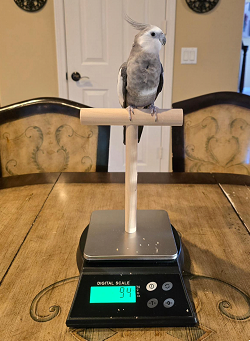
Dinner (another serving of chop) is served around 4:00 p.m., and in the evening they are moved to their sleeper cages in a small, converted closet that functions as their private retreat. Before bed, Pi and Moon are weighed every evening—which means yes, my birds have a stricter health-monitoring routine than many humans.
There is a good reason for this nightly ritual. Birds instinctively hide illness, often masking symptoms until they are quite sick. Weight loss can be one of the earliest signs something is wrong, making nightly weigh-ins less “helicopter parronting” and more preventative healthcare.
It’s a structured routine, but a meaningful one. Well-cared-for cockatiels can live well into their 20s and beyond—and some parrot species can live 80 years or more. It’s a good reminder that planning ahead isn’t just important for us, but for those (feathered or otherwise) who depend on us.
If you were to interview Moon and Pi, they would probably tell you that a well-structured routine is how they keep their human in line!
Estate Plans Age Too: How to Keep Yours Fresh and Effective
Your estate plan is one of the most important tools you will ever create. It is designed to protect you, your loved ones, and your assets—both during your lifetime and after your death. But an estate plan is not something you create once and forget. It reflects your life at a specific point in time, and as your life evolves, your plan should evolve with it.
Without periodic updates, even a well-crafted plan may no longer work as intended. In some cases, outdated provisions
can create confusion, unintended outcomes, or added stress for your family.
Here are a few common signs it may be time to review your plan:
- Changes in family circumstances – Marriage, divorce, the loss of a loved one, or the addition of children or grandchildren can significantly impact your plan.
- Financial changes – Retirement, a new business, an inheritance, or major asset changes should be reflected in your documents.
- Shifts in relationships – The people you once named as trustee, executor, or agent may no longer be the best fit.
- Relocation or out-of-state property – Different state laws can affect how your plan works.
- Outdated powers of attorney or beneficiary designations – These are critical to ensure the right people can act for you and receive your assets when needed.
A good rule of thumb is to review your estate plan every 3 to 5 years, or after any major life event. Or, put differently, ask yourself this question: “Do you know who you named as fiduciaries in your estate plan (trustee, executor, or agent under your powers of attorney)?” If you can’t answer that question, it is probably time for a review. After all, do you really still need guardians named for your 35-year-old child?
Keeping your plan current helps ensure that your wishes are honored and that your loved ones are protected—when it matters most.
